
 Win
WinThe Race to Own the Agentic Future
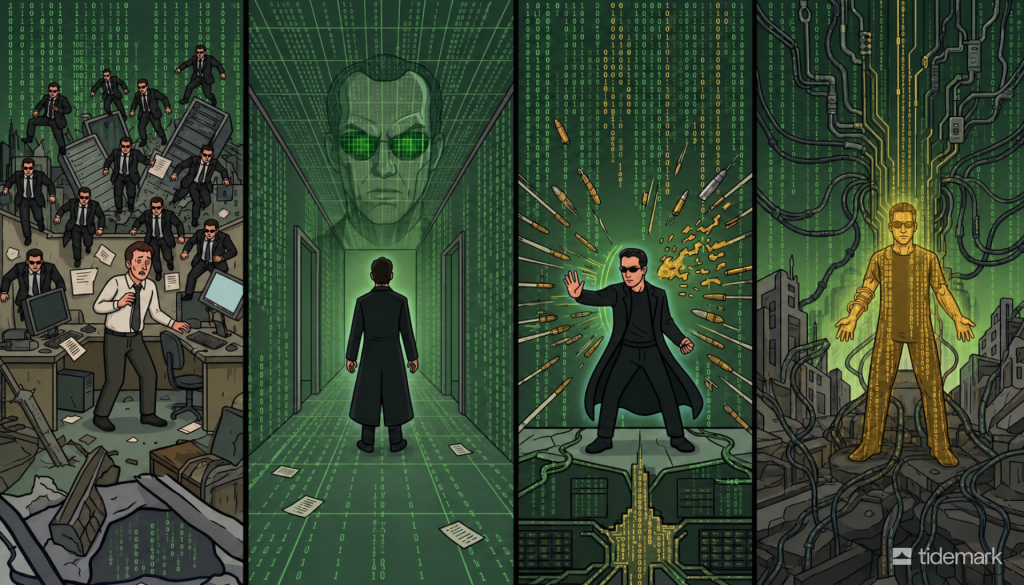
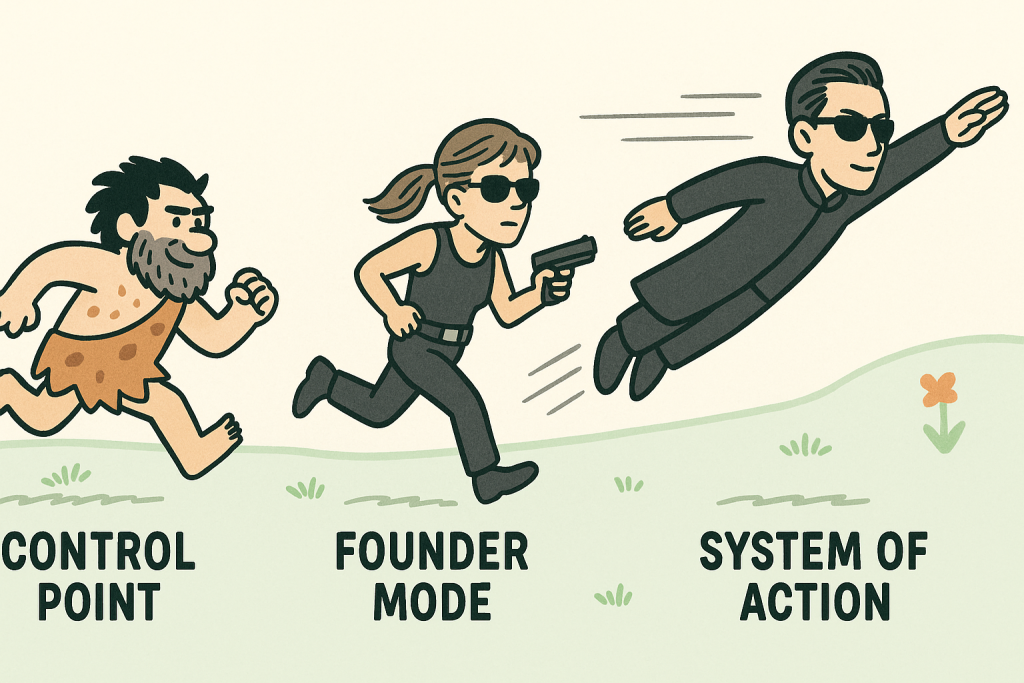
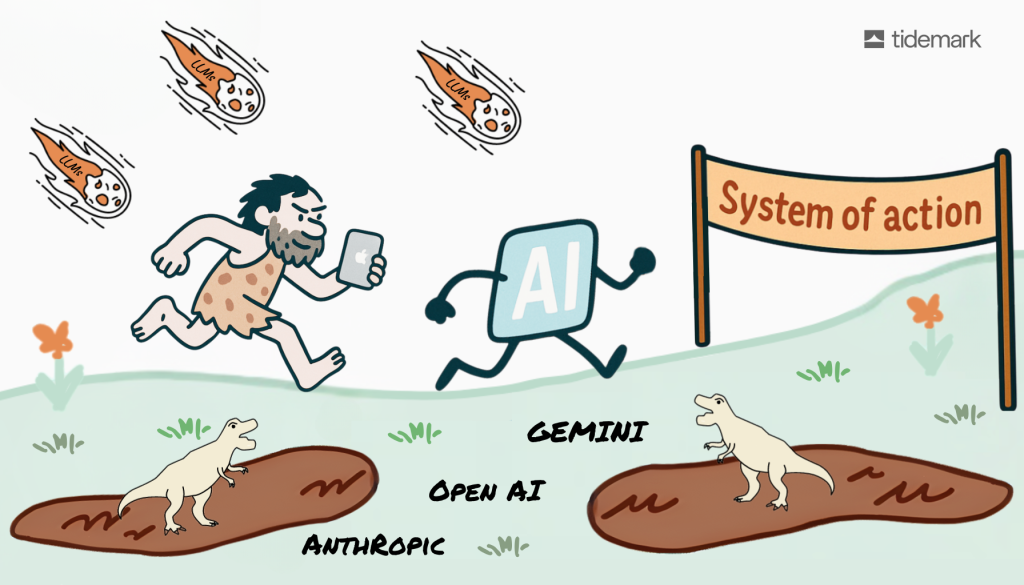
Modern Control Points have a head start in the race to become the System of Action and can emerge stronger in the agentic future. But if you aren't running scared, you're already behind.

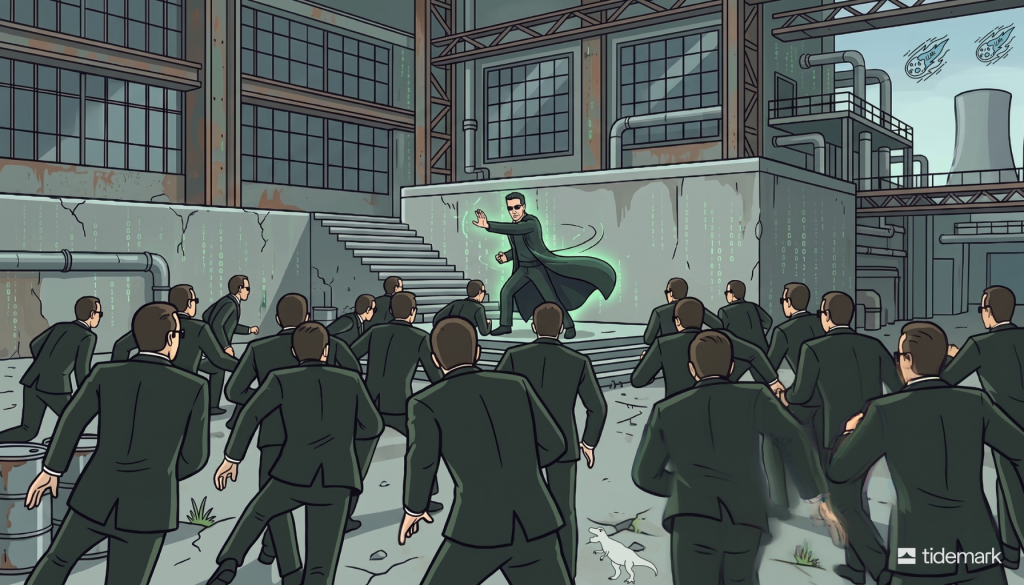
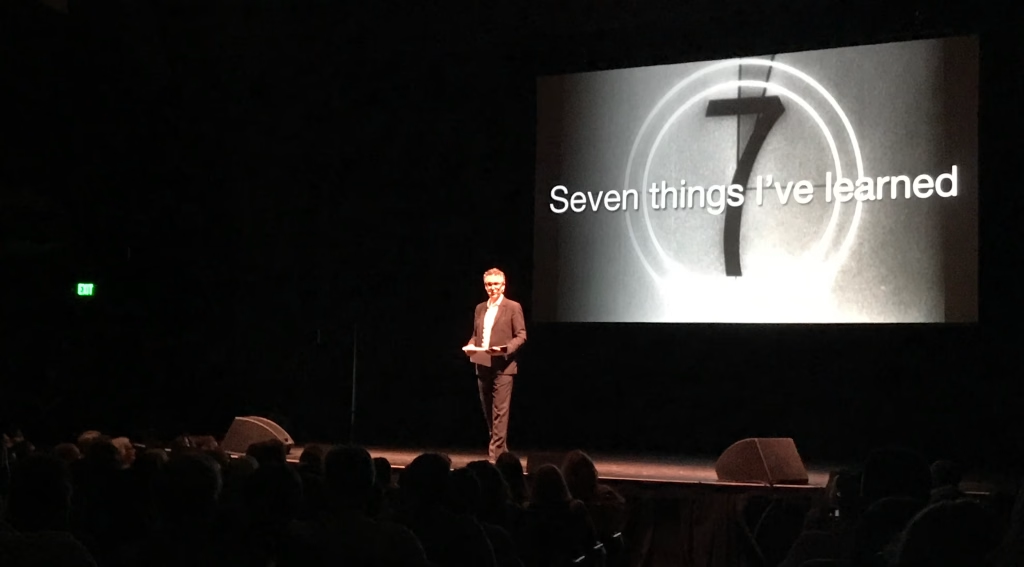
I haven’t been writing a lot for reasons I’ll share below. So when I was invited by Stripe to speak on the SaaSpocalypse as part of their SaaS Platform Leaders Summit, it turns out I had a lot to say. Simple questions were met with word gush as thoughts that had been built up inside my head over the last weeks and months tumbled out.
Writing is synthesis for me, so here’s my attempt to crystallize my view of the SaaSpocalypse.
The crowd was mainly vertical SaaS CEOs so this essay is written as such. But, the LLMs are moving up the stack, so much of this is applicable to Native AI startups as well.
Warning: my former colleague Evan once said that he could tell when I was amped on a topic by the number of childhood (1990s gulp!) movie and song references that showed up in the copy. By that measure, I guess you could say that I’m pretty fired up!
SaaSpocalypse & What We Believe
Public investors believe that AI will kill vertical SaaS, and public SaaS stocks have dropped by 40% (private stocks too, but private CEOs just don’t know it yet).
We believe the contrary. We believe modern vertical SaaS Control Points have a head start in the race to become the System of Action and can emerge bigger and more durable in the agentic future.
For those who haven’t read our work, let me catch you up on our viewpoint in six bullet points:
- The world thinks AI will kill vertical SaaS.
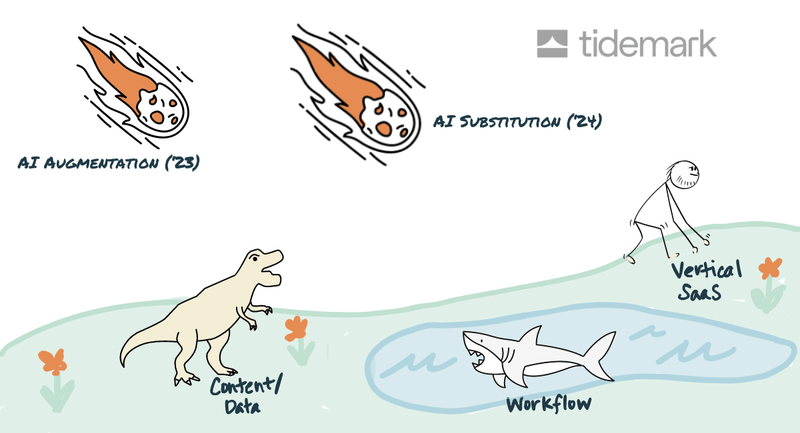
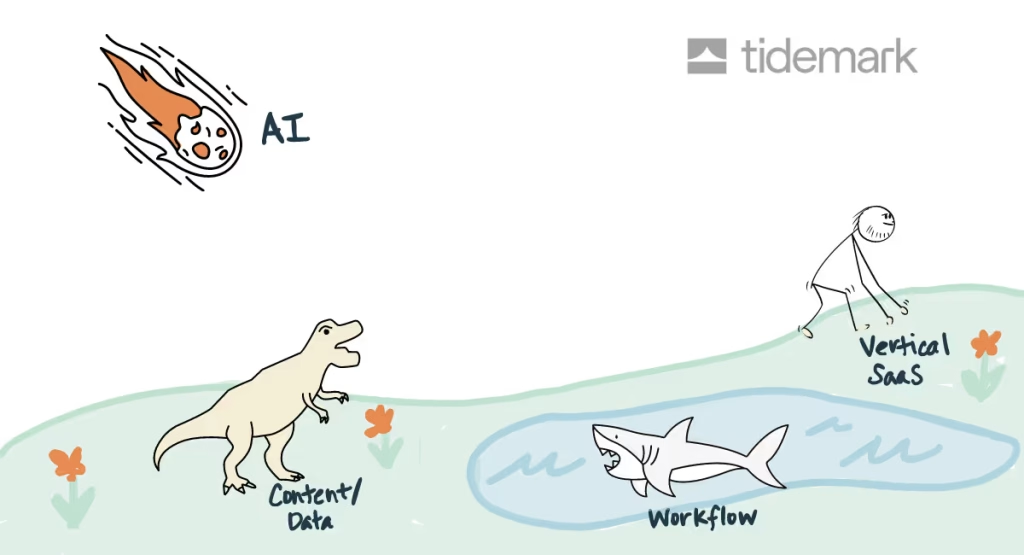
- We do not think it’s that simple, and have written as such since 2023.
- Content-based models and single-player tools are in deep trouble.
- But vertical SaaS Control Points have more to gain from agents than to lose — if, and it’s a very big if, they are vigilant, nimble and aggressive.
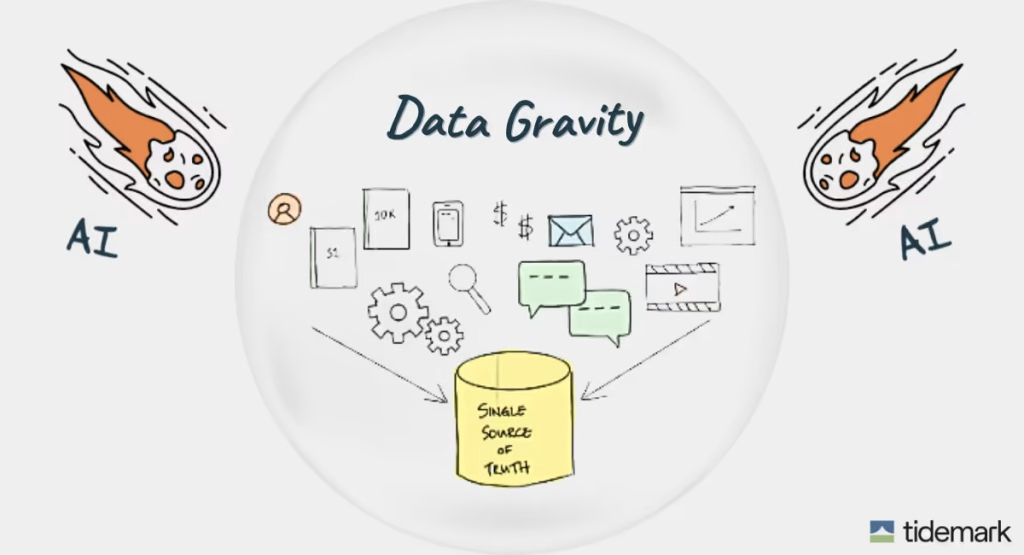
- By function of their data, workflow and account gravity, vertical SaaS Control Points have an unfair right to sell incremental products (including AI and agents).
- It’s a head start, not a predetermined outcome. It’s a race to become the System of Action.
It’s On Like Donkey Kong (Ice Cube circa 1991)
The launch of Opus 4.5 last November was an inflection point, and the race lurched into a full sprint by February with Opus 4.6.
Suddenly:
- Agents began reliably creating customer value and vendor revenue.
- Knowledge workers jumped into Claude Cowork.
- Fully agentic development became viable.
- The foundation models, particularly Anthropic, put that agentic capability to work and are shipping at product velocity never seen before.
This race isn’t slowing down anytime soon. These agents are the worst they will ever be. The core technology is only getting better. Today, you may be competing against a Native AI company offering one agent. Tomorrow, a swarm.
And the existential threat — for incumbents and Native AI entrants alike — is increasingly coming from below.
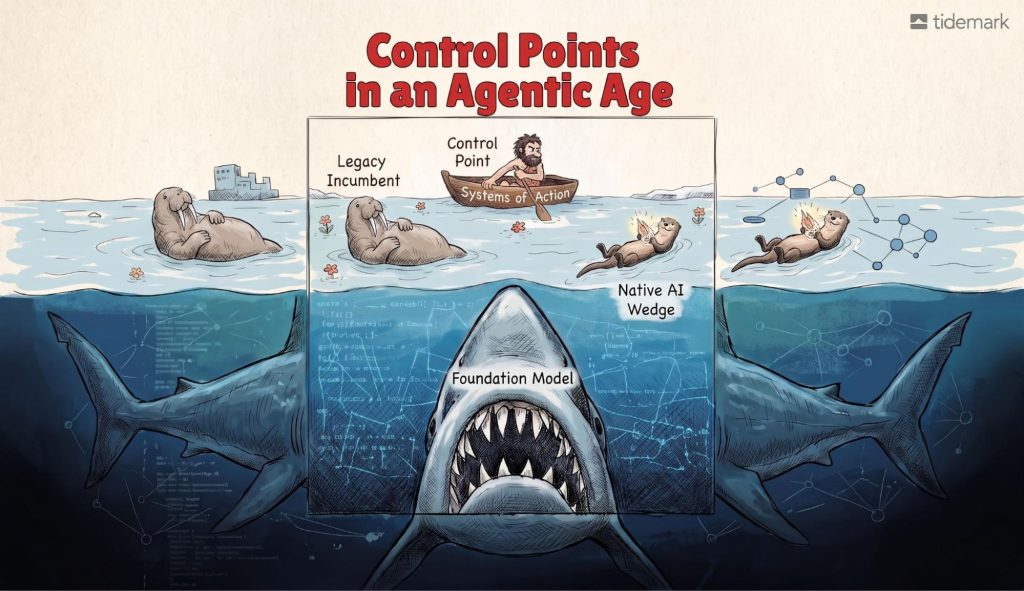
Foundation models, with their $1 trillion in market capitalization, are eyeing a move up the stack. They are attacking from the bottom up with infrastructure and harnesses, and from the top down with private-equity-financed FDEs built off balance sheet. And Claude Cowork is bidding to be the UI for all knowledge workers — the System of Action.
If you aren’t running scared, you’re already behind.
No One Believes You
You can argue until you’re blue in the face about your structural advantages, but right now, no one believes you. You can’t disprove a theoretical threat from future Native AI entrants or capabilities that foundation models haven’t developed yet. You can’t fight ghosts.
So, for some period of time, expect skepticism. Expect reduced access to capital. The momentum-money and mercenary talent are gone — and they aren’t coming back anytime soon.
Make the most of what you have: your customers, your teammates and your true-believer capital partners.
Which brings us to the only thing that matters now: show, don’t tell.
Show, Don’t Tell
We’ve seen three CEO reactions to this moment:
R.E.M. — “It’s the end of the world as we know it… and I feel fine.” Our growth is good. NRR is healthy. Business looks stable. What’s the problem? Denial.
Weezer — “The world has turned and left me here.” How did this happen to us? Bitterness.
Elton John — “I’m still standing after all this time.” Determined. Adaptive. The survivor.
Be Elton John.
Not Everyone is Going to Make It
The reality is that not everyone is going to make it. So it’s time to ignore the noise from the public markets and the doubters. Forget entirely about your 2025 valuation. Show, don’t tell.
Show your customers, your teammates, your investors — and most importantly, yourself — that your Control Point is ready for the agentic world.
In almost every market we’ve studied, customers want their “AI future” from existing modern Control Points (not always true for legacy private-equity-owned Control Points that have traded trust for pricing increases and EBITDA).
The opportunity is there. Now you need to deliver.
Step One: Win the Strategic Product Surfaces
What are the product surfaces, agents and value propositions that allow you to beat Native AI competitors to the punch — before they integrate around your Control Point and become the System of Action themselves? Go deep with our essays: SOA Parts 1, 2 and 3.
This is your first battle.
Step Two: Replumb for Velocity
The companies that win this transition will not just have better products. They will move faster. That means replumbing your organization for product velocity and organizational speed. Here’s how:
- Replumb leadership. Move on from blockers. Find the entrepreneurs inside your organization who can help pull your company into the future.
- Automate your SDLC (Software Development Lifecycle) aggressively. Fully agentic development is becoming viable. The dispersion will increasingly be between companies that can ship at AI speed and companies that cannot. Your customers want agents from you, but they won’t wait.
- Automate more and more of your business. LLMs have automated “sticky communications,” not only between businesses but within them. It’s now possible to create straight-through processing from customer interactions to customer insights to product insights to product prototypes to shipped code to customer outreach to beta feedback.
- Rethink the org chart. The futurists and crackpots on X who share visions of autonomous, humanless companies are not all wrong. Take the concepts that make sense to you. Again, find those leaders and contributors with high agency and lean out your organization for speed.
Step Three: Charge for the Agents
Deliver agents that create both customer value and vendor revenue. And if the agents are valuable, push yourself to charge for them. Don’t hide them inside a bundle simply because pricing feels uncomfortable. Standalone pricing forces honesty. It tells you and your team that the agents stand on their own merits. It tells investors that you’re in the game.
Pricing strategy in this environment is three-dimensional chess, so this is not a universal prescription. But it is something worth considering seriously.
Step Four: Build the Moats
The idea that moats no longer matter is hogwash. Yes, moats are harder to define right now because the underlying technology is evolving so quickly. And yes, there are moments when customer acquisition and distribution matter more than defensibility.
But if you are not thinking ahead, how likely are you to be prepared?
The best CEOs have a strong opinion about which parts of their product and capabilities are scarce and valuable, and which will be subsumed by foundation models or competed away. Not in a general way, but in a very specific one. This informs not only product strategy but also their stance on openness and infrastructure.
As Sean Doherty, Founder and CEO of GovDash, put it:
“Customers will be consuming tokens; I want them to consume on GovDash. We need to ensure that customers get the highest output per token on GovDash so they consume tokens on GovDash. That means every product surface must be the best micro harness to do that job, and GovDash as a macro harness is only as good as the collection of micro harnesses.”
Show, Don’t Tell Time for Tidemark
We haven’t published a lot this year, and probably won’t. We’ve been heads-down building frameworks, infrastructure and teams to help our portfolio companies transition into the agentic age.
To their credit, our management teams have leaned forward. They’ve made hard decisions, rethought org structures, accelerated product roadmaps and acted decisively even when the future isn’t fully clear. It’s wartime in vertical SaaS, and I’m proud to say that our CEOs have responded.
We believe the companies that make this transition will be cooking with gas. Historically, product velocity has been the constraint for vertical SaaS Control Points. Imagine what happens when it disappears entirely.
Entire service models historically built on labor economics (vs. proprietary IP) are already being reinvented on top of vertical SaaS rails.
“Extending through the Value Chain,” which felt frontier-level only a year ago, is becoming eminently achievable as agents smooth the friction between merchants and suppliers; merchants and consumers; and merchants and employees.
While we may be going a bit quieter publicly, we remain huge believers that vertical SaaS and Native AI Control Points can own the agentic age.
We’re bringing 300 vertical SaaS and Native AI founders together for talks on exactly these topics — Oct. 21-22 in San Francisco — at our third Collective Live. Come.


Keep up with Tidemark
Sign up to receive new content as soon as it's released