
2025 Vertical & SMB SaaS Benchmark Report






Last year, Tidemark launched the Vertical & SMB SaaS Benchmark Report to spotlight data no one has publicly gathered before for the Vertical SaaS community. The 2024 report captured an industry on the rise. The 2025 data confirms it: Vertical SaaS has arrived.
Many of the same levers still drive success — controlling the workflow, going multi-product, and embedding fintech — but the way founders are executing has changed. Operators are doubling down on proven playbooks while integrating AI at the core of their products and GTM strategies.
AI is no longer an experiment. It’s a revenue driver.
The takeaway is both validating and urgent: get the fundamentals right, and use AI to deepen them. Those who act quickly will grow faster, retain more customers, and build greater defensibility. Those who wait risk falling behind.
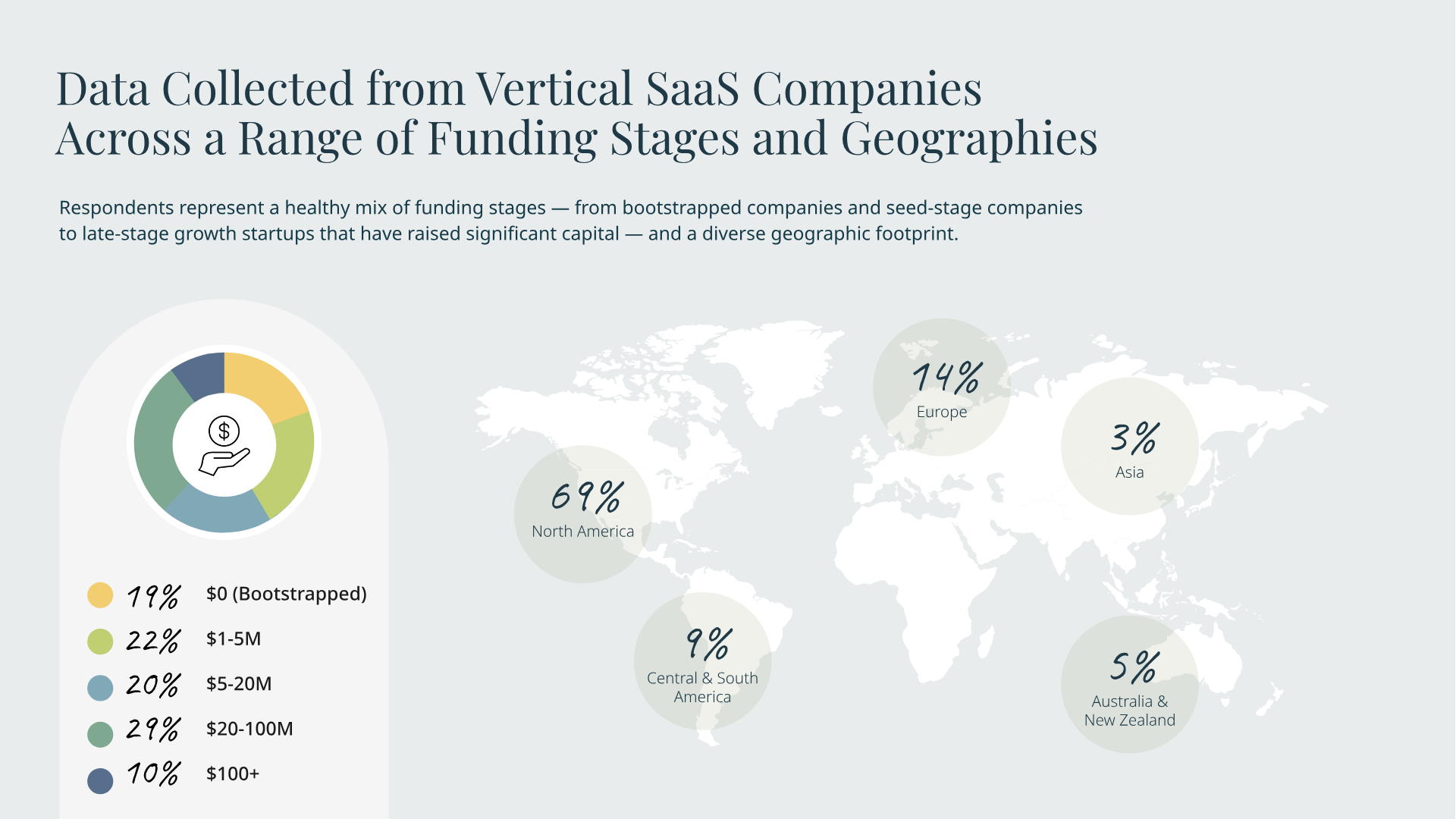
This year’s report draws from 200+ Vertical SaaS companies across 20 sectors and five continents, offering a comprehensive look at what’s driving growth, retention, and value creation in Vertical SaaS.
Control Point Momentum
The data shows that the choice of Control Point — whether it’s a POS system, CRM, fintech product, etc. — has ripple effects on growth, retention, and expansion opportunities.
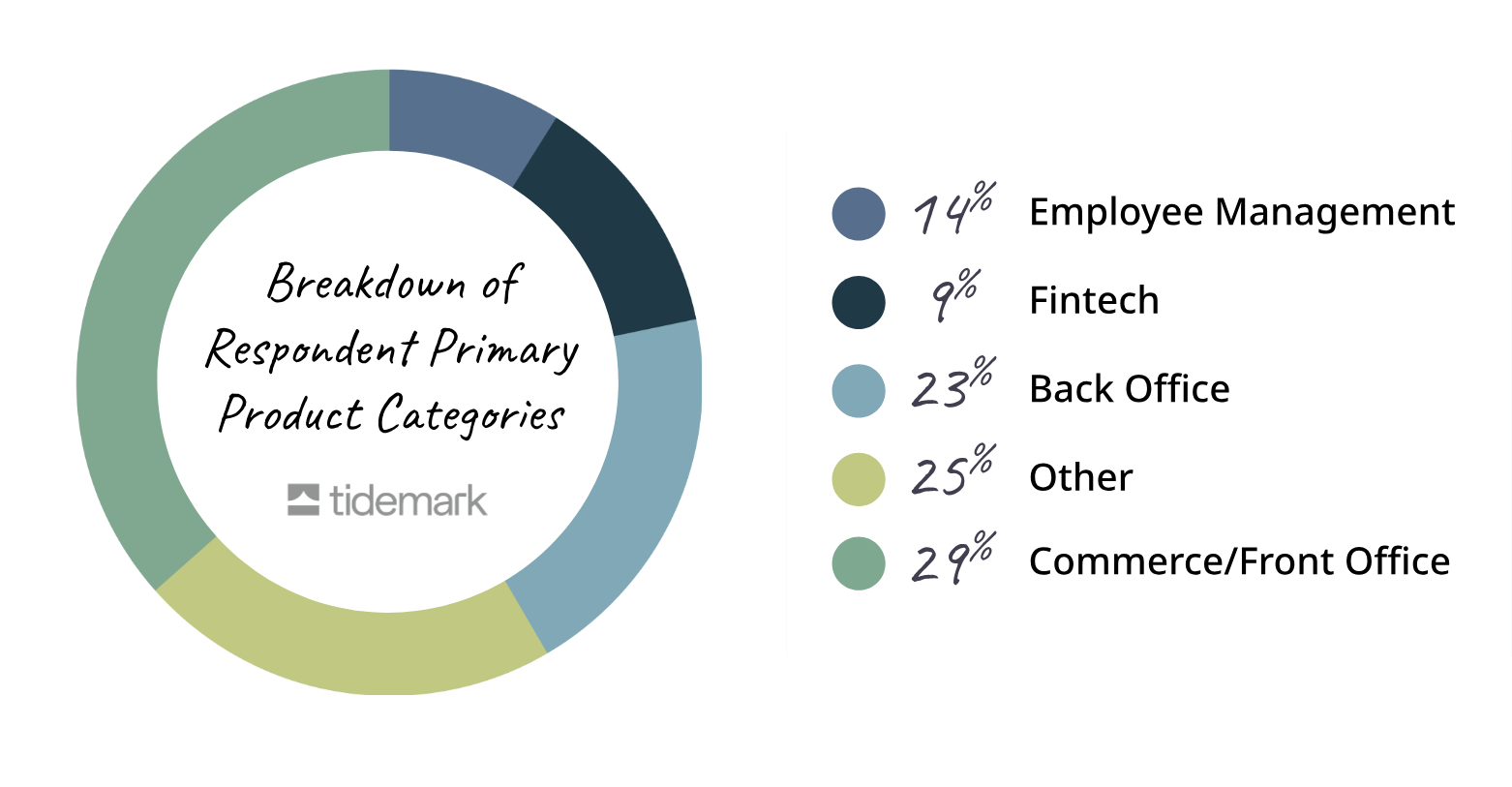
In our survey, the most common primary product categories were Commerce/Front Office and Back Office solutions. In fact, Commerce-related software (e.g., POS, e-commerce, scheduling) made up about 29% of primary products, and Back Office (e.g., accounting, payroll) about 23%. These two areas together constitute more than half of all respondents’ core products.
One of the big advantages of winning a Control Point is superior customer retention. When you’re embedded in the core operations of a customer, churn tends to be low — your product is simply too critical to rip out easily.
Our 2024 report showed that companies with Fintech and Back Office Control Points exhibited the highest gross and net retention, with Employee Management Control Points also showing strong NRR. In 2025, we see a similar pattern, with slight shifts: Fintech-led companies hold the strongest retention profile, closely followed by Back Office. Notably, Employee Management, which last year was a leader in NRR, dropped in retention.
Going Multi-Product Drives Growth
Vertical SaaS companies, almost by design, are positioned to expand beyond a single offering — and 2025 data shows multi-product remains key to accelerating growth. This year, 59% of companies reported offering more than one product, while 41% remain single-product businesses.
One clear benefit of going Multi-Product is an expansion of market opportunity. Multi-Product VSaaS companies in our survey report significantly larger reachable markets than their Single-Product counterparts. We also tracked that Multi-Product businesses are seeing tangible performance benefits. Using median 2024 ARR growth, Multi-Product companies grew about 21% faster than their Single-Product peers.
Plus, don’t miss a special callout from our friends at Stripe on strategies to increase payment adoption.

Spotlight on Vertical SaaS and the State of AI
No report in 2025 would be complete without a section on AI. We wanted to quantify how it’s actually being adopted and monetized among Vertical SaaS companies.
Our data also provides an early hint that companies embracing AI are seeing strong outcomes. We surveyed companies on whether they have AI-driven products, what those products do, how they’re built (models and tech), attach rates, and monetization strategies.
The results show that AI adoption in Vertical SaaS is rapidly accelerating, moving from novelty to a standard component of product strategy.
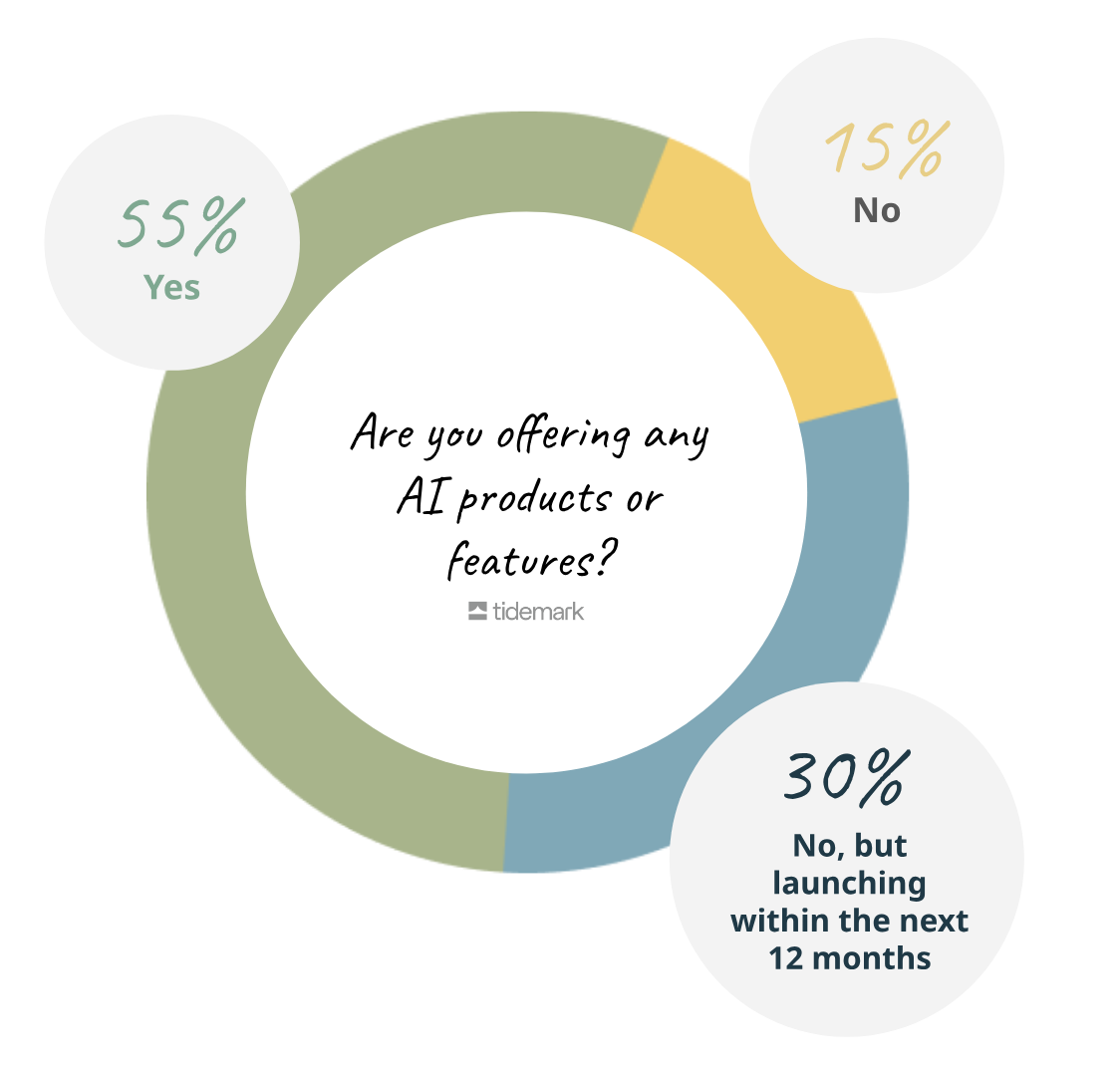
Read the full report for more AI insights on attach rates, growth and retention, monetization strategies, and speed to launch.











Keep up with Tidemark
Sign up to receive new content as soon as it's released